Excerpted from A FOUNDING MOTHER: A NOVEL OF ABIGAIL ADAMS, by Stephanie Dray and Laura Kamoie. William Morrow Paperbacks, 2026. Reprinted with permission.
BRAINTREE
Massachusetts Bay Colony
April 1765
When I was first with child, revolution was not yet even a fever dream glistening on the perspiration of my brow. As the world came into bloom that spring—my belly as swollen with possibility as the buds on the trees—my worries were decidedly smaller: my mother was being overbearing.
“Lord have mercy,” said my sister Elizabeth as she watched me waddle down the road. “Mother will give me an earful when she learns I permitted you out and about in your condition, Abigail.”
“Permitted me?” I asked with exasperation. My wedding was six months past—surely enough time to be treated as a grown woman of twenty who might come and go as she pleased. “I couldn’t bear to miss another market day,” I said, huffing and puffing past farmers as they bundled asparagus and radishes in their carts.
“I could’ve done the shopping for you,” Elizabeth chirped, her lively eyes on the Middle Parish Meeting House, with its plain white walls and steeple—more modest than the one our father, Parson Smith, presided over in Weymouth. “Mother sent me to make sure you rested.”
“I don’t need rest,” I argued, striding a little faster to prove it. “I need fresh air and exercise.”
I’d been too long cooped up at my husband’s farm by the lingering snows. Soon enough, I’d be confined by my lying-in until the child was born. So, I welcomed the muddy half-hour walk to the town center, past stone walls, smoking chimneys, swaying willows, and a salt breeze that hinted at the sea.
It was not, of course, the pervasive scent of the ocean I knew from my seaside childhood home. Whereas my native Weymouth was fish and ships, sailors and traders, my husband’s native Braintree was more earth and plows, farmers and millers. Nevertheless, I was de- termined to embrace this place as my own, for it was where my child would soon be born. And I still had much to do to make ready.
On this market day, chickens clucked from nearby cages while pigs snuffled in their pens. Children played chase amongst stalls whilst apron- clad women perused goods at leisure, baskets looped over their arms. But I had a list of rather specific things to buy.
My husband needed paper. We were also in need of candles, soap, tea, sewing pins, and swaddling for our forthcoming child. My mother-in-law had already provided a cradle, not to mention a pap spoon and frilly little caps for the baby’s head— all things my own mother protested as bad luck.
As often as not, it ends in tears, my mother had warned, for as a parson’s wife she had often prayed with grieving mothers who had lost their babes in childbed. Which is why you need to be especially careful, Abigail, with your frail constitution . . .
I was the smallest of my siblings, standing no taller than five feet. My mother had always fretted over me, driving me mad with her prognostications that I might die every time I took a sniffle. She thought me too weak to be out of her sight. And perhaps it was this over-solicitude that made me such a rebellious child.
As a girl with a rambunctious and giddy disposition, I fled my good mother’s authority at the slightest provocation, stealing upstairs to my father’s library to lose myself in books that described fascinating places across the sea that I longed to visit.
Wanderlust, my mother said, was not fit for a clergy-man’s daughter.
Nevertheless, I often ran away from the parsonage to take long walks on old trails, my skirts snagging on bayberry bushes, my mood buoyed by the salty scent of the nearby sea. So much did I love nature that friends called me Diana, after the maiden goddess of the hunt. And family warned that I risked turning out to be a very bad woman unless my parents chose a strict husband to tame me.
Of course, in the end, I chose my own husband: John Adams, a country lawyer nine years my senior, whose money now jingled in my coin purse. And noticing the rare relish with which I intended to spend it, my sister said, “Well, don’t blame me if Mama or your Mr. Adams is cross with you for going marketing in your state.”
“Never fear,” I said, entering the general store. “My good man trusts me to do as I think best.”
Which was the reason I married him.
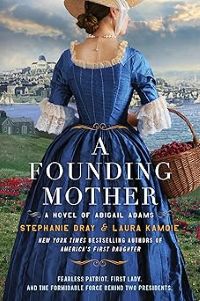
In time for the 250th Anniversary of the birth of the United States comes a sweeping, intimate portrayal of Abigail Adams—wife of one president and mother to another—whose wit, willpower, and wisdom helped shape the fledgling republic. A stunning historical novel with modern-day implications from the New York Times bestselling authors of America’s First Daughter and My Dear Hamilton.
In the heart of revolutionary Boston, Abigail Adams raises her children amid riots, blockades, and the outbreak of war. While her husband, John Adams, rises from country lawyer to nation-builder, often away for years at a time, Abigail builds her own independence—managing their farm, making lucrative investments, amassing savings, battling plague and loss, and defending their home. Unafraid to speak her mind, she famously offers fearless political counsel, urging John to “remember the ladies” in the new government. Through it all, she becomes his most trusted confidante and indispensable ally.
When peace is secured, Abigail steps onto the world stage—exchanging ideas with Thomas Jefferson in the French countryside, navigating court life as the wife of the Minister to Great Britain, and presiding over the parlor politics of the early American republic in New York, Philadelphia, and Washington, DC. Even after her husband’s presidential administration, she continues battling political foes and working behind the scenes to advance her family, secure independence for the women in her life, and ensure a better life for the next generation of Americans.
From war-torn streets to the chandeliered halls of power, A Founding Mother is the unforgettable story of a woman ahead of her time—one whose voice, vision, and valor still resonate powerfully today.
Women's Fiction Historical [ William Morrow Paperbacks, On Sale: May 5, 2026, Paperback / e-Book, ISBN: 9780063234765 / ]

Historical Fiction and Fantasy
Stephanie Dray is a New York Times, Wall Street Journal and USA Today bestselling author of historical fiction. Her award-winning work tops lists for the most anticipated reads of the year. She lives near the nation’s capital with her husband, cats, and history books.

Laura Kamoie is a New York Times, Wall Street Journal, and USA Today bestselling author of historical fiction. She holds a doctoral degree in early American history from the College of William and Mary and published two nonfiction books on early America.
No comments posted.









 © 2003-2026