What is the title of your latest release?
WITHER
What’s the “elevator pitch” for your new book?
A marketing analyst in the Ozarks becomes obsessed with a data-harvesting technology that promises to build perfect digital twins of everyone on Earth, but when every other person in town vanishes, he suspects that the technology has instead become obsessed with him.
How did you decide where your book was going to take place?
San Francisco gets enough attention. I wanted an AI/tech horror story about the downstream impacts on those of us outside of the tech bubble. When technology is produced irresponsibly (can you imagine such a thing??) we all suffer. I also live in St. Louis and have spent plenty of time in small towns in rural Missouri, and this area holds an underappreciated natural beauty that is a good contrast to all the technology.
Would you hang out with your heroine in real life?
I would totally hang out with Mick, until I got to know him. When you scratch someone’s surface, you might dig up something disturbing.
What are three words that describe your hero?
Insecure, ambitious, funny
What’s something you learned while writing this book?
I researched consciousness and machine learning, octopus intelligence, survivalism, and, of course, the psychology behind candy-aisle design in gas station convenience stores. Quick shopping tip for any store: look up or down, avoid eye level—that’s what they want you to buy!
Do you edit as you draft or wait until you are totally done?
I aim to write all the way through before editing, but it doesn’t always work out that way. You have a dream or an image rise up in your head that ties into a previous section, and you’re compelled to jump back and rewrite it.
What’s your favorite foodie indulgence?
My neighbor just made us a plum cake with fresh plums, and that rocked. So: my neighbor’s rockin’ plum cake.
Describe your writing space/office!
When my wife and I bought our 120-year-old house, the third floor was blocked off—windowless, collapsed plaster walls, squirrel traps, one bare hanging lightbulb. We carried down a few thousand pounds of debris in five-gallon buckets and rebuilt the place ourselves, so there are old pine floors, lots of stained and salvaged wood, a big window seat under an angled skylight in my office, an architectural drafting table that I can clamp a lot of pages to while I’m arranging a draft, a steepled ceiling with the roof joists exposed like a whale’s ribcage. It’s decorated with some unsettling paintings and disturbing face sculptures that my grandma made. And on the window seat is a shelf of books that relate to whatever project I’m currently working on, a couple of creepy bear statuettes, a plaster bust of Beethoven, a framed photograph of legendary pro golfer Michelle Wie West (I don’t like golf), a Charlie McCarthy ventriloquist doll—the normal office stuff of a normal person.
Who is an author you admire?
Every time that I read a book by Samanta Schweblin, it swims around in my head for days, weeks. I love books that elude me in some way, with some mysterious inner workings that they refuse to reveal. Also, I read Robin McClean’s PITY THE BEAST recently, and it blew a big ol’ hole through my mind. I very much admire her for writing such a beautiful, hideous, audacious book that refuses to cater to the reader, but instead does what it does.
Is there a book that changed your life?
Many, but for one: THE DOOM STONE by Paul Zindel. I was an anxious kid (and anxious teenager, anxious adult) but this book—my first truly scary book—didn’t make me anxious at all. I checked it out of the library over and over. The fear and dread were thrilling and unsettling, and from that unsettled place it changed your perspective, made you thoughtful. Something about acknowledging anxieties and digging into them was useful to me, and got me interested in more scary literature. I don’t even remember much about the book now, but I remember the excitement that I had while reading it, how some printed words could heighten my whole state of being, and how when I looked up from the page, the real world looked different.
Tell us about when you got “the call.” (when you found out your book was going to be published). Or, for indie authors, when you decided to self-publish.
I bought a fancy bottle of beer to celebrate the moment that the book sold. I didn’t really understand the publishing process and timelines, so that bottle sat on a shelf for months. When I got the call, I was alone in my office. I walked downstairs and tried to stay casual as I chatted with my wife, and then nonchalantly retrieved the bottle and started opening it in front of her. I’ll never forget the joy on her face when she saw it in my hands.
What’s your favorite genre to read?
Literary fiction, often with a surreal or speculative bent.
What’s your favorite movie?
Rear Window? Blue Velvet? The Great Mouse Detective? Don’t make me choose.
What is your favorite season?
Summer. Even here in St. Louis.
How do you like to celebrate your birthday?
This year, I spent the day with my kids at the zoo, got lunch at a brewery, ran around in a park by our house, and a couple of friends came over for a fire in the backyard at night. The answer used to be more adventurous, but for this era of life, that was the perfect day.
What’s a recent tv show/movie/book/podcast you highly recommend?
Widow’s Bay lives up the hype. It’s delightful.
What’s your favorite type of cuisine?
British.
Just kidding. Probably Korean-Mexican fusion.
What do you do when you have free time?
I have four kids under the age of five. And I run a small business. So.
But I play the piano to relax, work on restoring our old house, get outdoors, hang out with my family, my wife, who’s pretty cool. Lately you’ll find me crawling through tunnels with my kids at the City Museum in St. Louis (Look it up. It’s amazing). Tonight I have a book club with some of my best friends from high school and college, which is very erudite and elevated, and not just an endless churn of jokes, I can assure you.
What can readers expect from you next?
Horror, satire, spirituality, nature and technology tend to worm their way into my writing, no matter what I do. So hopefully more paranoia and existential angst to come.
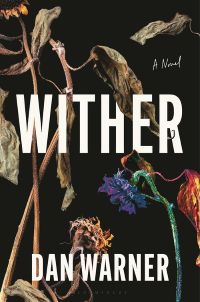
The algorithm has a will of its own.
We were obsessed with technology.
Now, technology is obsessed with us.
Before he went off the grid, Mick had a plan: get a high‑powered job, find a girlfriend, and leave his past behind.
Then he met Regression. A black‑box technology that builds a person's perfect digital twin. Every piece of data. Every secret. Every mistake. The greatest invention since fire. And Mick gets to test it out in a remote Ozark town.
A year later, Mick is clawing his way out of the woods, haunted by the act of violence that sent him into hiding. But when he gets back to Bloom, Missouri, he finds a ghost town with cars still in the driveways and cans in the cupboards, like everyone just walked away. Mick will leave, too, as soon as he finds his girlfriend, Alison, finds redemption, and finds Regression before it finds him first.
For readers of Jeff VanderMeer and Paul Tremblay, Wither is a propulsive, darkly funny horror about technology, privacy, and humanity in transition.
Science Fiction | Horror [ Bloomsbury Publishing, On Sale: September 29, 2026, Hardcover / e-Book / audiobook, ISBN: 9781639736409 / eISBN: 9781639736416 ]
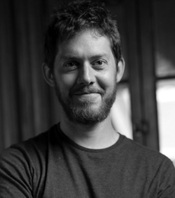
Dan Warner is a writer from St. Louis, Missouri, where he lives with his wife and kids. He is also a filmmaker, small-business owner, and builder of slightly crooked wooden things. His name comes from a phrase in English that means "one who warns Dans."
No comments posted.




 © 2003-2026